

News
20
Aug
Why Consider Buying Automatic Coffee Vending Machines
Introduction: Convenience and Quality Are Converging in One Machine
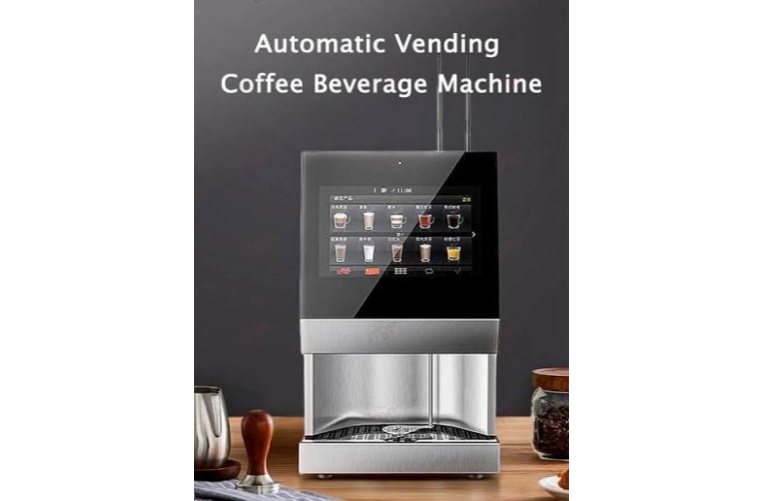
In an age where convenience and quality increasingly go hand in hand, the automatic coffee vending machine has become a fixture in offices, hotels, airports, and even homes around the world. People no longer want to choose between a fast cup of coffee and a genuinely good one — modern vending technology has made it possible to get both from a single, self-service machine.
That shift has been accelerated by an unexpected source: China's own transformation from a historically tea-centric culture into one of the fastest-growing coffee markets in the world.
A Cultural Shift That's Reshaping an Industry
For generations, China's beverage culture centered around tea. That's changed significantly in recent years. A burgeoning young generation has developed a genuine, fast-growing love for coffee, driving a notable and sustained increase in domestic coffee consumption. Coffee shops have expanded rapidly across major Chinese cities, and coffee has shifted from a niche import to an everyday habit for millions of younger consumers.
This shift hasn't gone unnoticed by manufacturers. Some visionary companies have responded by importing key components from established European coffee equipment makers and assembling commercial coffee vending machines domestically within China — combining proven European engineering standards with Chinese manufacturing scale and cost efficiency.
The Advantages of Sourcing Coffee Vending Machines From China
1. A Strong Foundation in IoT Technology
China has built a genuinely strong base in Internet of Things (IoT) technology, and that expertise extends directly into modern coffee vending machines.
Smart, connected coffee vending machines have streamlined nearly every part of the vending operation — from remote inventory monitoring to real-time sales tracking — ensuring a smoother, more reliable experience for both operators and end users
The latest technological advancements in vending more broadly — touchscreen interfaces, cashless payment integration, remote diagnostics — tend to reach the coffee vending category quickly in China, since manufacturers are drawing from the same mature IoT and electronics supply chain used across the broader vending industry
For buyers, this means access to genuinely current technology, not equipment that's several product generations behind what's available elsewhere
2. A Real, Structural Cost Advantage
One of the primary reasons buyers consider Chinese-manufactured coffee vending machines is the inherent cost advantage — and it's not simply a matter of cutting corners.
China's manufacturing capabilities, combined with genuine economies of scale, allow for more competitive pricing without necessarily compromising on build quality or core components
Savvy buyers can access meaningful cost savings compared to equivalent machines manufactured in higher-cost regions, particularly when ordering at moderate to high volumes
Combining imported, proven components (such as brewing systems sourced from established European suppliers) with Chinese assembly and manufacturing is one way buyers get both credibility on core mechanics and a more accessible price point
3. Production Capacity That Keeps Growing
The surging demand for coffee vending machines within China's own domestic market mirrors a broader global trend toward self-service coffee — and that demand growth has a direct, positive ripple effect for international buyers.
Rising domestic demand has driven a real increase in manufacturing production capacity across the industry
Expanded capacity, in turn, helps drive down per-unit production costs further, since manufacturers are producing at greater scale and spreading fixed costs across more units
For buyers, this translates into more cost-effective options over time, along with shorter lead times as manufacturers build out capacity to match demand
What This Means for International Buyers
There are genuinely compelling reasons for buyers outside China to consider sourcing automatic coffee vending machines from Chinese manufacturers:
Cost savings driven by manufacturing scale and competitive production economics
Access to current technology, including IoT-enabled remote monitoring, smart brewing systems, and modern payment integration
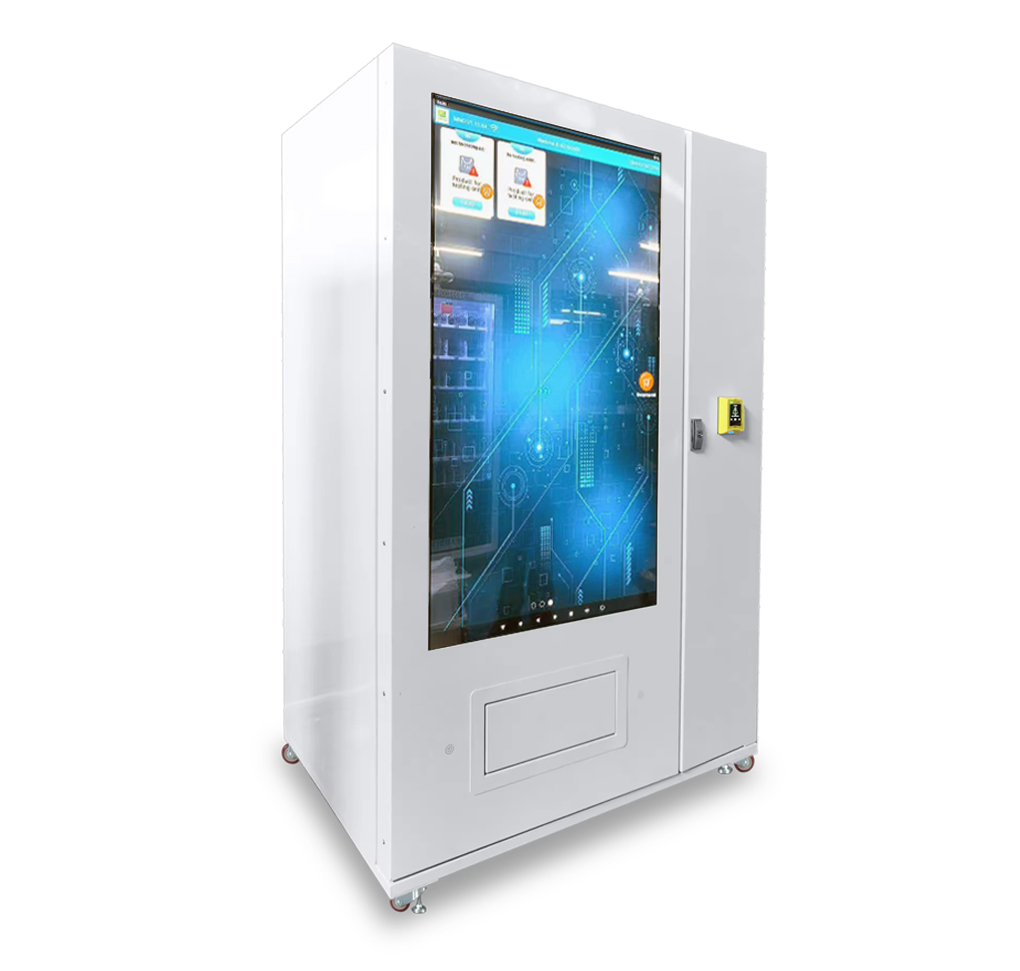
A versatile range of options, from compact instant-coffee units to fully automatic machines with bean-to-cup brewing and large-format touchscreens
A market actively investing in quality, driven by rising domestic demand rather than purely export-focused, lowest-cost production
The world is currently witnessing a genuine convergence between China's traditional tea culture and a modern coffee renaissance — and that convergence is creating real opportunities for buyers looking to source quality vending equipment at a competitive price.
What to Confirm Before You Order
Sourcing internationally still requires the same diligence as any equipment purchase, regardless of the cost advantage:
Confirm which core components (brewing units, mixers, compressors) are imported versus domestically manufactured, since this affects both quality expectations and after-sales part sourcing
Ask about certifications relevant to your target market (CE, FCC, or others as applicable) for your specific machine configuration
Clarify warranty terms and how spare parts and technical support are handled once the machine is installed and operating in your market
Request real reference installations or case studies, rather than relying solely on product photography or marketing claims
Frequently Asked Questions
Why has coffee consumption grown so quickly in China?
A younger generation of consumers has driven a significant cultural shift toward coffee in recent years, moving China's beverage culture beyond its traditionally tea-centric roots and creating strong domestic demand that has, in turn, accelerated investment in coffee vending technology and manufacturing.
Are Chinese-manufactured coffee vending machines lower quality than European ones?
Not necessarily. Many manufacturers combine imported components — including key parts from established European suppliers — with Chinese assembly and manufacturing, aiming to pair proven engineering with more competitive production costs rather than compromising on core build quality.
What technology should I expect on a modern coffee vending machine from China?
IoT-enabled features such as remote inventory monitoring, real-time sales data, and cashless payment integration are increasingly standard, reflecting China's broader strength in IoT and vending technology more generally.
Is it cost-effective to import a coffee vending machine from China?
For many buyers, yes — the combination of manufacturing scale, growing production capacity, and competitive economics generally results in meaningful savings compared to equivalent machines built in higher-cost manufacturing regions, particularly at moderate to high order volumes.
Conclusion
There are genuinely compelling reasons for buyers around the world to consider automatic coffee vending machines from China: real cost savings, access to current IoT-driven technology, and a growing range of options, all backed by a domestic market that's investing heavily in coffee culture and vending innovation. As convenience continues to meet innovation, sourcing a coffee vending machine from China may prove to be a brew-tiful decision.
For more information and to explore our range of quality coffee vending machines, visit our product page or contact our team for further details.
Contact Us
📞 Phone/WhatsApp: +86 132 1355 7186
📧 Email: sales@buysmartlocker.com
Our Contact
Minno Furtniture
Customize smart storage lockers,parcel delivery lockers, key management cabinet,Vending machines,Office/School and home furniture.
-
Call For Inquiry
-
Send Us Email
sales@buysmartlocker.com
Need Help For Project!
We are ready to help your next projects, let’s work together
 WhatsApp
 sales@buysmartlocker.com
 +8613213557186