

News
09
Dec
Types and Application Scenarios of Mobile Shelving Systems
As storage demands continue to grow across industries, organizations are looking for smarter ways to maximize space, improve efficiency, and ensure safety. Mobile shelving systems—also known as compact shelving systems or high-density storage systems—have become a preferred solution for warehouses, offices, archives, libraries, and industrial facilities.
This article explores what a mobile shelving system is, the main types of mobile shelving systems, and their application scenarios, helping you better understand how to choose the right solution for your storage needs.
What Is a Mobile Shelving System?
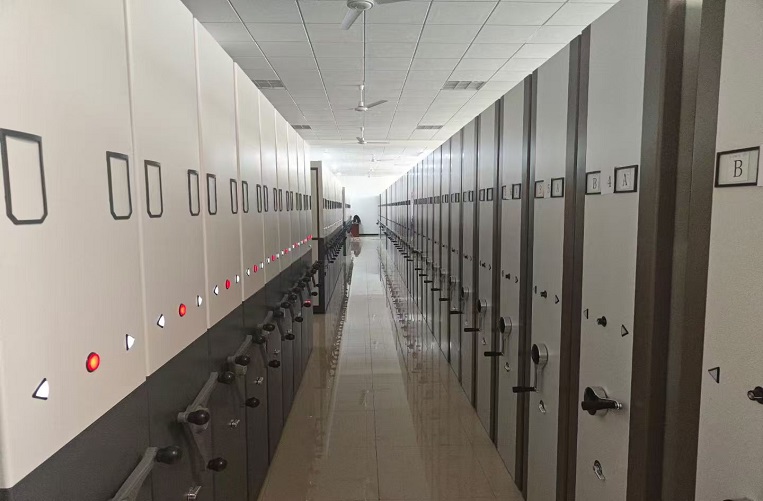
A mobile shelving system is a high-density storage solution where shelving units are mounted on movable bases that run along floor-mounted rails. Unlike traditional static shelving, mobile shelving eliminates fixed aisles. Shelves can be moved only when access is needed, significantly increasing storage capacity within the same floor space.
By reducing unused aisle space, mobile shelving systems can increase storage density by up to 50–80%, making them ideal for environments where space is limited or storage volume is high.
Mobile shelving systems are commonly used for document storage, industrial materials, tools, archives, medical records, and warehouse goods.
Types of Mobile Shelving Systems
Mobile shelving systems can be broadly classified into three main types based on their drive mechanism and level of automation: manual mobile shelving, electric mobile shelving, and smart mobile shelving systems.
Manual Mobile Shelving Systems
Manual mobile shelving systems are operated by hand, typically using a mechanical hand wheel or crank. The user turns the wheel to move shelving units along the rails.
Key characteristics:
Simple mechanical structure
No electrical power required
Low installation and maintenance costs
Reliable and durable for long-term use
Best suited for:
Archives and record rooms
Libraries with moderate access frequency
Offices and document storage rooms
Facilities with limited budgets
Manual mobile shelving is often chosen for its cost-effectiveness and stability, especially in environments where shelving does not need to be moved frequently throughout the day.
Electric Mobile Shelving Systems
Electric mobile shelving systems use electric motors to move shelving units at the push of a button. These systems are designed for heavier loads and higher usage frequency compared to manual systems.
Key characteristics:
Motor-driven operation for smooth movement
Higher load capacity for heavy-duty storage
Safety features such as emergency stop buttons and obstacle detection
Faster and more convenient access
Best suited for:
Warehouses and industrial storage
Hospitals and medical record storage
Government archives
Large-scale document centers
Electric mobile shelving systems improve operational efficiency while reducing physical effort, making them ideal for environments with frequent access and heavier storage requirements.
Smart Mobile Shelving Systems
Smart mobile shelving systems represent the most advanced form of mobile shelving. They combine electric movement with intelligent control systems, sensors, and software integration.
Key characteristics:
Touchscreen or software-based control
Access control via passwords, cards, or biometric systems
Intelligent safety sensors and anti-pinch protection
Integration with archive management or inventory systems
Real-time monitoring and usage tracking
Best suited for:
High-security archives and confidential document storage
Financial institutions and legal organizations
Research centers and laboratories
Modern smart warehouses
Smart mobile shelving systems offer enhanced security, automation, and data management, making them ideal for organizations with strict access control and digital transformation requirements.
Application Scenarios of Mobile Shelving Systems
Thanks to their flexible design and high storage efficiency, mobile shelving systems are widely used across many industries.
Archives and Record Management Centers
Archives often store large volumes of documents that must be preserved securely and accessed efficiently. Mobile shelving systems maximize storage capacity while protecting records from damage and unauthorized access. Smart systems further enhance record tracking and access control.
Libraries and Educational Institutions
Libraries use mobile shelving to store books, journals, and academic materials while maintaining a clean and organized environment. Manual or electric systems allow librarians to adapt shelving layouts as collections grow.
Warehouses and Industrial Facilities
In warehouses, mobile shelving systems are used for storing spare parts, tools, components, and inventory items. Heavy-duty electric or smart mobile shelving systems support high load capacities and frequent access, improving workflow efficiency.
Hospitals and Medical Facilities
Hospitals rely on mobile shelving systems to store medical records, pharmaceuticals, and equipment. These systems help ensure organized storage, quick access, and compliance with data protection and hygiene requirements.
Offices and Corporate Document Storage
For offices managing contracts, invoices, and administrative files, mobile shelving systems provide a professional, space-saving solution. They help reduce clutter and improve document organization in limited office spaces.
Benefits of Using Mobile Shelving Systems
Mobile shelving systems offer several advantages over traditional static shelving:
Significant space savings
Higher storage density
Flexible configuration options
Improved organization and accessibility
Enhanced safety and security features
Long-term cost efficiency
These benefits make mobile shelving systems a strategic investment for organizations looking to optimize storage performance.
Price of Mobile Shelving Systems
The price of a mobile shelving system depends on several factors, including:
Type of system (manual, electric, or smart)
Load capacity and material thickness
System size and number of shelving units
Control system and safety features
Customization and installation requirements
Manual systems are generally the most affordable, while smart mobile shelving systems represent a higher investment due to advanced technology and automation. Choosing the right system depends on your budget, usage frequency, and storage needs.
How to Choose the Right Mobile Shelving System
When selecting a mobile shelving system, consider the following:
What items will be stored, and their weight
Frequency of access
Space availability and floor load capacity
Security and access control requirements
Future expansion needs
A professional manufacturer can help assess your requirements and recommend a customized solution.
Why Choose Minno?
Minno is an experienced manufacturer who ensures:
Durable, high-quality materials
Customizable shelving configurations
Reliable safety and control systems
OEM and ODM support for project-specific needs
Long-term technical support and service
In addition to mobile shelving systems, many manufacturers also provide complementary storage solutions such as smart storage lockers, parcel lockers, key management cabinets, and filing cabinets, enabling integrated storage planning.
Conclusion
Mobile shelving systems are an efficient, flexible, and future-ready storage solution for a wide range of industries. By understanding the different types—manual, electric, and smart—and their application scenarios, organizations can make informed decisions that improve space utilization, security, and operational efficiency.
Whether for archives, warehouses, offices, or industrial environments, a well-designed mobile shelving system delivers long-term value and scalable storage performance.
Contact Us
📞 Phone/WhatsApp: +86 132 1355 7186
📧 Email: sales@buysmartlocker.co
Our Contact
Minno Furtniture
Customize smart storage lockers,parcel delivery lockers, key management cabinet,Vending machines,Office/School and home furniture.
-
Call For Inquiry
-
Send Us Email
sales@buysmartlocker.com
Need Help For Project!
We are ready to help your next projects, let’s work together
 WhatsApp
 sales@buysmartlocker.com
 +8613213557186