

News
16
Dec
How Secure Is a Key Management Cabinet?
Key security is a critical part of asset management in modern organizations. From offices and factories to hotels, hospitals, and property management companies, controlling who has access to keys—and when—directly impacts safety, accountability, and operational efficiency. This is why key management cabinets, especially smart key management cabinets, are increasingly adopted as a secure alternative to traditional key storage methods.
What Is a Key Management Cabinet?
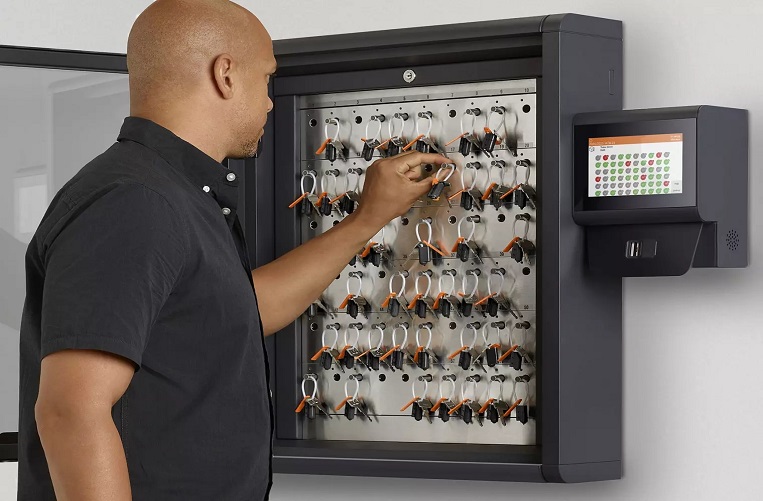
A key management cabinet is a secure storage system designed to control, monitor, and record access to physical keys. Unlike basic key boxes, modern key management cabinets combine steel construction, electronic locking, and software-based access control to ensure that keys are only accessed by authorized users.
Smart key management cabinets often support PIN codes, RFID cards, biometric identification, or mobile authentication. Every key transaction is recorded, providing complete visibility into key usage and responsibility.
Key Features of a Key Management Cabinet
A secure key management cabinet typically includes:
Heavy-duty steel structure to protect against forced entry and tampering
Electronic access control instead of traditional mechanical locks
Individual key locking slots to prevent unauthorized removal
Audit trail system that records every key transaction
User permission management for controlled access
Alarm and alert functions for abnormal activities
Backup power system to maintain security during outages
These features work together to form multiple layers of protection.
How Secure Is a Key Management Cabinet?
1. Strong Physical Security
A secure key management cabinet starts with its physical construction.
High-quality cabinets are built from heavy-duty steel, designed to resist prying, impact, and forced entry.
Key physical security features include:
Reinforced steel housing
Tamper-resistant doors
Industrial-grade hinges
Secure mounting to walls or floors
Compared to traditional key boxes, steel key management cabinets provide a far higher level of protection against theft and vandalism.
2. Advanced Access Control Systems
Modern key management cabinets replace mechanical locks with electronic access control, significantly improving security.
Common access methods include:
PIN codes
RFID cards
Fingerprint or biometric authentication
QR code or mobile app access
Only authorized users can access the cabinet, and permissions can be customized based on role, time, or key type.
3. Individual Key Control and Locking
Unlike basic key cabinets where all keys are accessible once the door is opened, smart key management cabinets offer individual key locking.
This means:
Each key is secured in its own slot
Users can only remove keys they are authorized to access
Other keys remain locked even when the cabinet is open
This greatly reduces internal misuse and improves accountability.
4. Complete Audit Trail and Tracking
One of the strongest security advantages of a key management cabinet is traceability.
The system automatically records:
Who took a key
Which key was removed
Time and date of access
When the key was returned
These detailed audit logs eliminate disputes, discourage misuse, and support internal audits or compliance requirements.
5. Real-Time Alerts and Monitoring
Smart key cabinets can actively monitor activity and respond to abnormal behavior.
Security features may include:
Door-open alerts
Unauthorized access alarms
Overdue key return notifications
System tampering alerts
Administrators receive notifications in real time, allowing immediate action if an issue arises.
6. Protection Against Human Error
Many key-related incidents are caused not by theft, but by human error—forgetting to return keys, sharing keys, or misplacing them.
Key management cabinets prevent these issues by:
Requiring authentication for every key removal
Blocking unauthorized access
Enforcing return deadlines
Recording responsibility for each key
This structured control dramatically reduces key loss.
7. Power Failure and Emergency Security
A well-designed key management cabinet remains secure even during power outages.
Typical safeguards include:
Backup battery systems
Manual emergency access with authorization
Secure data storage that preserves access logs
This ensures uninterrupted protection under all conditions.
8. Software-Level Security and Permissions
In advanced systems, security extends beyond hardware into software.
Key software security features include:
User role management
Multi-level permissions
Password encryption
Cloud-based or local server options
Integration with existing access control systems
These tools allow administrators to define exactly who can access what, and when.
9. Suitable for High-Security Environments
Because of these layered security features, key management cabinets are widely used in:
Corporate offices
Industrial facilities
Car dealerships and fleet management
Hospitals and laboratories
Property management companies
Government and public institutions
In these environments, uncontrolled key access is simply not acceptable.
So,A high-quality key management cabinet provides multi-level security far beyond traditional key storage.
Why Key Management Cabinets Are Safer Than Traditional Key Storage
Traditional key cabinets rely on mechanical locks and manual sign-out processes, which are prone to loss, duplication, and human error. In contrast, key management cabinets eliminate these risks by enforcing digital control, restricting access, and maintaining permanent records.
This makes them especially suitable for environments where keys grant access to valuable assets, sensitive areas, or critical infrastructure.
Application Scenarios
Key management cabinets are widely used in:
Corporate offices for meeting rooms, server rooms, and storage areas
Industrial facilities for machinery and restricted zones
Property management companies for building and unit keys
Car dealerships and fleet management for vehicle keys
Hospitals and laboratories for controlled-access areas
Hotels and hospitality businesses for operational key control
Government and public institutions requiring strict accountability
In all these scenarios, security, traceability, and efficiency are essential.
Price of Key Management Cabinets
The price of a key management cabinet depends on several factors:
Cabinet size and key capacity
Steel thickness and structural design
Type of access control (PIN, RFID, biometric)
Level of software functionality
Standalone or network-connected system
Customization and OEM/ODM requirements
Basic electronic key cabinets are more affordable, while advanced smart key management systems with software integration and real-time monitoring are positioned as long-term security investments. Although the initial cost may be higher than traditional key boxes, the reduction in key loss, labor cost, and security incidents delivers strong long-term value.
Why Choose Us?
Minno is a professional manufacturer specializing in secure storage and access control solutions. Our key management cabinets are designed to deliver high security, durability, and operational reliability.
We offer:
OEM / ODM customization for cabinet size, key capacity, access methods, and software
High-strength steel construction with long service life
Stable electronic systems and secure access control
Flexible configurations for different industries and use cases
In addition to key management cabinets, we also manufacture:
Smart parcel delivery lockers
Smart storage lockers
Smart key cabinets
Steel lockers and file cabinets
Our integrated product range allows customers to build a complete and secure storage ecosystem from a single supplier.
Contact Us
📞 Phone/WhatsApp: +86 132 1355 7186
📧 Email: sales@buysmartlocker.co
Our Contact
Minno Furtniture
Customize smart storage lockers,parcel delivery lockers, key management cabinet,Vending machines,Office/School and home furniture.
-
Call For Inquiry
-
Send Us Email
sales@buysmartlocker.com
Need Help For Project!
We are ready to help your next projects, let’s work together
 WhatsApp
 sales@buysmartlocker.com
 +8613213557186